
Addiction May Belong to One Person, but the Entire Family Learns to Live Around It
There is something about addiction that I don’t think people fully understand until they have lived beside it.
The person using the drug may be one person.
But addiction?
Addiction moves into the whole house.
It sits at the dinner table.
It sleeps beside your phone.
It goes to work with you.
It follows you to the grocery store.
It interrupts birthdays.
It changes holidays.
It rearranges finances.
It changes relationships between siblings.
It teaches people to listen to the tone of a voice, watch someone’s eyes and notice whether something feels off.
And sometimes it turns a completely ordinary unanswered phone call into:
Are they alive?!?!
Families living beside addiction learn a language nobody ever wanted to become fluent in.
Withdrawal.
Detox.
Relapse.
Treatment.
Narcan.
Overdose.
Recovery.
Boundaries.
And perhaps the most exhausting word of all:
Waiting.
Waiting for them to answer.
Waiting for them to come home.
Waiting for treatment.
Waiting for the next crisis.
Waiting for something to finally change.
Families Become Detectives Without Ever Applying for the Job
People living around addiction can become unbelievably observant.
Is their speech different?
Are their pupils different?
Why are they sleeping so much?
Why are they suddenly wide awake?
Where did that money go?
Why is the bathroom locked?
Why are there pieces of foil?
What’s that powder?
Why is that prescription already empty?
Why did they disappear for three hours?
Who is that new friend?
Why aren’t they answering?
You start noticing tiny things because sometimes tiny things become enormous things.
And before long, you may realize you are spending an incredible amount of your life trying to predict another human being.
Trying to prevent the next use.
The next lie.
The next overdose.
The next catastrophe.
It is exhausting.
Then Comes the Phone
Families affected by addiction know exactly what I mean when I say the phone.
The unknown number.
The late-night call.
The text that only says:
“Mom.”
The police department.
The hospital.
The friend who never normally calls you.
The silence after repeated calls go straight to voicemail.
Your brain can travel an unbelievable distance in about three seconds.
People outside this world may think:
Why are you always worrying?
Because sometimes worrying came from experience.
Sometimes the terrible thing you were afraid of actually happened before.
And once your brain learns that?
It doesn’t simply forget.
Everyone Starts Orbiting the Person Who Is Using
This is something families have to be incredibly careful about.
When someone is in active addiction, their needs can become so urgent that everyone else starts disappearing.
They need a ride.
They need money.
They’re withdrawing.
They’re missing.
They’re in the hospital.
They’re in trouble.
They need treatment.
They left treatment.
They relapsed.
They overdosed.
Everything becomes an emergency.
And emergencies are loud.
Meanwhile, somebody else in the family is quietly sitting at the edge of the room thinking:
What about me?
The sibling who has tried to be “the easy one.”
The child whose parent keeps disappearing.
The spouse holding everything together.
The grandparent raising grandchildren.
The teenager who doesn’t want to add one more problem to Mom’s plate.
The younger brother or sister who is furious because every family conversation somehow ends up being about the same person.
They matter too.
SAMHSA recognizes that substance-use disorders can affect the entire family and recommends support for family members themselves, including counseling, family therapy and peer-support options when appropriate.
Addiction should not be allowed to take every person in the family hostage.
Siblings Carry Things We Don’t Always See
I think siblings deserve their own conversation inside this conversation.
Because what are they supposed to feel?
Scared?
Angry?
Protective?
Embarrassed?
Jealous?
Heartbroken?
All of it?
Sometimes siblings watch enormous amounts of attention go toward the child who is struggling.
They may understand why.
And still resent it.
Then they feel guilty for resenting it.
They may think:
Mom already has enough to deal with.
So they don’t talk about what they need.
They become responsible.
Independent.
Quiet.
Or angry.
There is no one “right” sibling reaction to addiction.
They are living through it too.
And they need permission to say, “This is hurting me.”
without somebody immediately answering, “But your brother is sick.”
Both things can be true.
Their brother may be struggling with a serious substance-use disorder.
And they are hurting too.
Children Living With Addiction Need Adults to Notice Them
When a parent is experiencing active addiction, children can end up adapting to chaos in ways adults don’t always see.
Some become little caretakers.
Some learn not to ask for things.
Some become extremely responsible.
Some act out.
Some become anxious.
Some try to protect the parent.
Some hide what happens at home.
And some simply don’t understand why the person they love keeps changing.
SAMHSA’s family-treatment guidance emphasizes looking at the needs of the whole family, not only the person diagnosed with the substance-use disorder, and recognizes that children and caregivers may require their own services and support.
Children shouldn’t have to become addiction experts because an adult in their life is struggling.
They deserve adults who notice:
This is affecting you too.
Families Get Angry
Let’s talk about this part because sometimes addiction conversations become so focused on compassion that families feel guilty for being furious.
You are allowed to be angry.
Seriously.
You can understand addiction and still be angry that somebody lied to you.
You can understand how opioid use disorder changes behavior and still be furious that money disappeared.
You can love someone and be completely exhausted by them.
You can understand relapse and still think:
I cannot do this again.
Compassion doesn’t erase consequences.
Understanding addiction doesn’t magically restore trust.
Trust may need to be rebuilt.
Sometimes slowly.
Sometimes painfully.
And sometimes a relationship cannot return to what it was.
Families are human too.
You Can Love Them and Still Say No
This may be one of the hardest lessons in families affected by addiction.
Because saying no can feel cruel when you are terrified the person may die.
No, I won’t give you money.
No, you cannot use drugs in this house.
No, I won’t call your employer and lie.
No, I won’t pay this debt again.
No, I won’t let you drive the children.
No, I won’t pretend I don’t see what is happening.
No, you cannot live here under these conditions.
Those sentences can break a parent’s heart.
But boundaries are not the same thing as abandonment.
You can refuse to support the addiction while still supporting the person.
You can buy food instead of handing over cash.
You can offer a ride to treatment.
You can keep naloxone.
You can answer a phone call.
You can help find resources.
You can say:
“I love you enough to help you get treatment.”
and also:
“I love myself and the rest of this family enough not to continue living like this.”
Both can exist.
And No, You Cannot Love Someone Sober
I wish you could.
If love alone cured addiction, there would be a lot fewer grieving families.
Families try everything.
Begging.
Threatening.
Reasoning.
Crying.
Promises.
Ultimatums.
Treatment.
Prayer.
Money.
No money.
Moving them home.
Making them leave.
Checking their phone.
Taking their phone.
Watching them sleep.
Checking whether they’re breathing.
Trying harder.
Trying differently.
Trying one more time.
At some point many families run into one of the most painful truths there is:
You can love someone deeply and still not control what they do.
That isn’t the same as giving up on them.
It means recognizing where your power ends.
You can offer help.
You can create boundaries.
You can learn.
You can prepare for emergencies.
You can encourage treatment.
You can change your own responses.
But you cannot crawl inside another person’s body and make the decision for them.
God knows families would if they could.
“Did I Cause This?”
Parents ask this.
Spouses ask versions of it too.
What did I miss?
What did I do wrong?
Was I too strict?
Not strict enough?
Did I rescue too much?
Did I set the boundary too late?
Was there something happening that I should have seen?
Yesterday we talked about how substance-use disorders develop through complicated combinations of biological, psychological, social and environmental factors.
There isn’t one universal explanation.
Family environment can matter.
So can genetics.
Mental health.
Peers.
Trauma.
Access.
Stress.
Age.
The substance itself.
And many other factors.
That means families should absolutely be willing to look honestly at patterns that may need to change.
But that is very different from reducing someone’s addiction to:
“His mother caused it.”
or
“If his wife had handled him differently, he would have stopped.”
Human beings are far more complicated than that.
Families Need Recovery Too
I don’t mean that every family member has a substance-use disorder.
I mean living beside addiction can change people.
You learn survival behaviors.
You stop trusting.
You become hyperaware.
You start managing everyone.
You become afraid to hope.
You may lose pieces of your own identity because your entire life has become focused on whether someone else is okay.
This is one reason family support matters.
SAMHSA specifically notes that caring for someone with a mental-health or substance-use disorder can be taxing and encourages caregivers to prioritize their own health as well. Its treatment guidance also describes family counseling and peer-recovery support as valuable tools for families dealing with the isolation, shame and confusion that can accompany addiction.
Getting support for yourself is not betraying the person who is struggling.
You are allowed to need help too.
There Are Places Just for Families
Sometimes family members think:
But I’m not the one using. Why would I need a support group?
Because you’re living this too.
Nar-Anon Family Groups are specifically for relatives and friends affected by someone else’s addiction. Nar-Anon describes meetings as places where family members can share experience, strength and hope with other people who understand what living beside addiction can feel like.
For people who prefer something that isn’t a 12-step model, SMART Recovery Family & Friends offers tools focused on coping, self-care and interacting more effectively with a loved one experiencing addictive behavior.
Family therapy can be another option. SAMHSA’s guidance describes family-based approaches as potentially helpful both for the person in treatment and for rebuilding healthier family interactions—while also noting that family involvement needs to be appropriate and safe for the circumstances.
Maybe your support comes from one of those places.
Maybe it’s a counselor.
A grief or recovery group.
Your church.
A trusted friend.
Another mother who understands the sentence:
“He’s not answering.”
without needing you to explain why your stomach just dropped.
Find somebody.
This is too heavy to carry completely alone.
Be Careful Who You Take Advice From
Families receive a LOT of advice.
Usually from people who have never lived it.
Just kick them out.
You need to save them.
Stop answering the phone.
Never give up on your child.
They need to hit rock bottom.
If you keep helping, you’re enabling.
If you make them leave, you’re abandoning them.
Everybody suddenly becomes an addiction specialist at Thanksgiving dinner. 😂
Here is what I have learned about complicated family situations:
There is rarely one sentence that fits every family.
Someone may need a firm boundary.
Someone may need treatment immediately.
One family may safely allow a person home under specific conditions.
Another absolutely cannot.
One person may be helping.
Another may be enabling.
Children may need protection.
Safety may completely change the answer.
This is where professional guidance and people who actually understand substance-use disorders can be invaluable.
You do not have to build your family’s plan from Facebook comments.
Please don’t.
We have enough problems already. 😂
Keeping Them Here Does Not Mean Losing Yourself
This might be one of the most important things I say during these ten conversations.
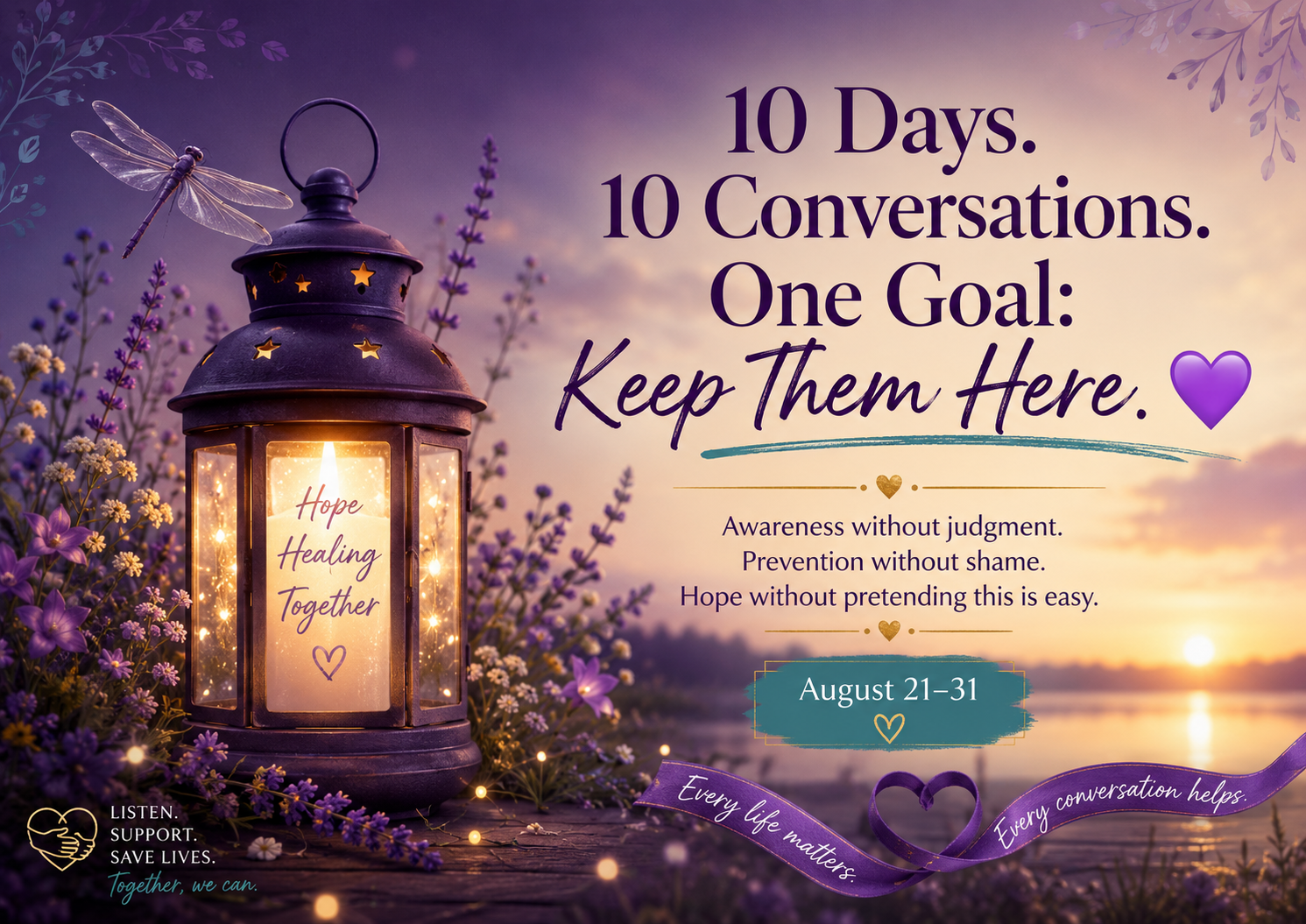
Our campaign is called:
Keep Them Here.
And I mean that.
Use the Narcan.
Call 911.
Offer treatment.
Learn about addiction.
Challenge stigma.
Leave room for recovery.
But Keep Them Here does not mean:
Destroy yourself trying to control another adult.
Let every boundary disappear.
Allow your other children to live in constant chaos.
Ignore violence.
Accept dangerous behavior.
Give away every dollar you have.
Pretend you’re okay.
Make addiction the center of every waking moment.
Keeping someone alive and keeping yourself alive inside are not mutually exclusive goals.
The family deserves to survive addiction too.
And Sometimes the Ending Is Not Recovery
There is another group of families I cannot leave out.
The ones who did all of this…
and their person still died.
They carried Narcan.
They tried treatment.
They set boundaries.
They removed boundaries.
They begged.
They prayed.
They answered the phone.
They stopped answering.
They tried one more program.
One more conversation.
One more promise.
And then the phone call came anyway.
Those families do not need us searching backward through their story trying to find the one decision that would have magically changed the ending.
They need compassion.
Because hindsight becomes brutal after an overdose death.
Your mind can create an endless courtroom:
What if I had…
Sometimes there simply isn’t an answer.
And the love that remains afterward is enormous.
That is part of this story too.
If They Are Still Here, There Is Still Hope!
Maybe your family is living in active addiction right now.
Maybe tonight is chaotic.
Maybe you’re exhausted.
Maybe you’ve stopped believing promises.
Maybe you don’t know whether treatment number six will be any different from treatment number five.
You do not have to pretend everything will definitely work out.
That is not hope.
That’s pretending.
Hope can be smaller than that.
Hope can sound like:
They’re alive today.
Treatment still exists.
Recovery still happens.
I can learn better boundaries.
My other children can get support.
I can get support.
We can make one healthier decision today.
That’s enough.
Sometimes hope doesn’t feel like sunshine and inspirational quotes.
Sometimes hope is simply:
We are not done yet.
Love,
~Mandy💜
Today’s Conversation 💬
If someone you love is experiencing addiction, ask yourself:
How much of my life has become organized around their addiction?
What has changed in me?
What do I need?
What do the other people in this family need?
Are there boundaries I need to create?
Is there a boundary I created out of fear that I need professional help thinking through?
Have the children had a safe place to talk?
Do I have anybody who understands what this is like?
And maybe the hardest question:
Am I trying to control something that I cannot control?
Then choose one thing that supports you or another member of the family.
Make the counseling appointment.
Find the family-support meeting.
Call the friend.
Take your other child to lunch.
Go for the walk.
Turn your phone off for an hour if it is safe to do so.
Rest.
Laugh at something without feeling guilty.
Let another part of your life take up some space.
Because loving someone experiencing addiction does not mean addiction deserves every inch of your world.
You are still here too.
And you matter. 💜
Tomorrow — Day 10 🕯️
They Were Here
Tomorrow is our final conversation.
And it falls on International Overdose Awareness Day.
We are going to remember the people we lost.
But after everything we’ve talked about during these ten days, I don’t want tomorrow to be only about death.
I want to remember lives.
Names.
Stories.
Recovery.
The people still fighting.
The families still hoping.
The people carrying Narcan.
The ones beginning treatment.
The ones who relapsed yesterday and got up again today.
And the people whose chairs will always be empty.
Tomorrow we light the candle. 🕯️
Not because their story ended with an overdose.
But because:
They were here.
And because every person who is still here deserves every reasonable chance we can give them to stay.
💜
Sources & Further Reading
SAMHSA — Helping Families Cope with Mental Health and Substance Use Disorders. SAMHSA recognizes that substance-use disorders affect whole families, that family support can be important in recovery, and that caregivers need to protect their own health and well-being as well.
SAMHSA — Substance Use Disorder Treatment and Family Therapy. Guidance on involving families appropriately in treatment, family counseling, peer support and the needs of the entire family system.
Nar-Anon Family Groups. Peer-support groups specifically for relatives and friends affected by someone else’s addiction, with Narateen available for teenagers in affected families.
SMART Recovery Family & Friends. A non-12-step option offering practical coping, self-care and communication tools for people affected by a loved one’s addictive behavior.
Leave a Reply